
There are moments when the feeling of being out of control does not announce itself loudly, but instead settles in quietly, showing up as restlessness, shallow breathing, or the sense that everything around me is slightly misaligned.
On those nights, I reach for my nightstand. Not because it is important in itself, but because it is small enough to handle and close enough to touch, and because changing it gives my body something concrete to respond to when my thoughts refuse to cooperate.
Rearranging my nightstand has become one of those habits that looks insignificant from the outside but does real work on the inside. It is not about aesthetics or organization in the traditional sense.
It is about restoring a sense of agency in a moment when my inner world feels scattered, and doing it quietly, without turning it into a performance.
The Subtle Feeling of Losing Control
When I feel out of control, it rarely comes from one obvious event. It builds slowly, through overstimulation, unresolved conversations, too many open loops in my head. I notice it most at night, when the distractions of the day fall away and whatever I have been carrying settles heavier in my chest.
In those moments, my body wants something specific. Not a solution, not insight, but a way to reestablish order without demanding emotional processing.
Rearranging my nightstand meets that need perfectly. It gives me a task with a clear beginning and end, one that does not ask me to explain myself or improve anything about who I am.
Why the Nightstand, Specifically
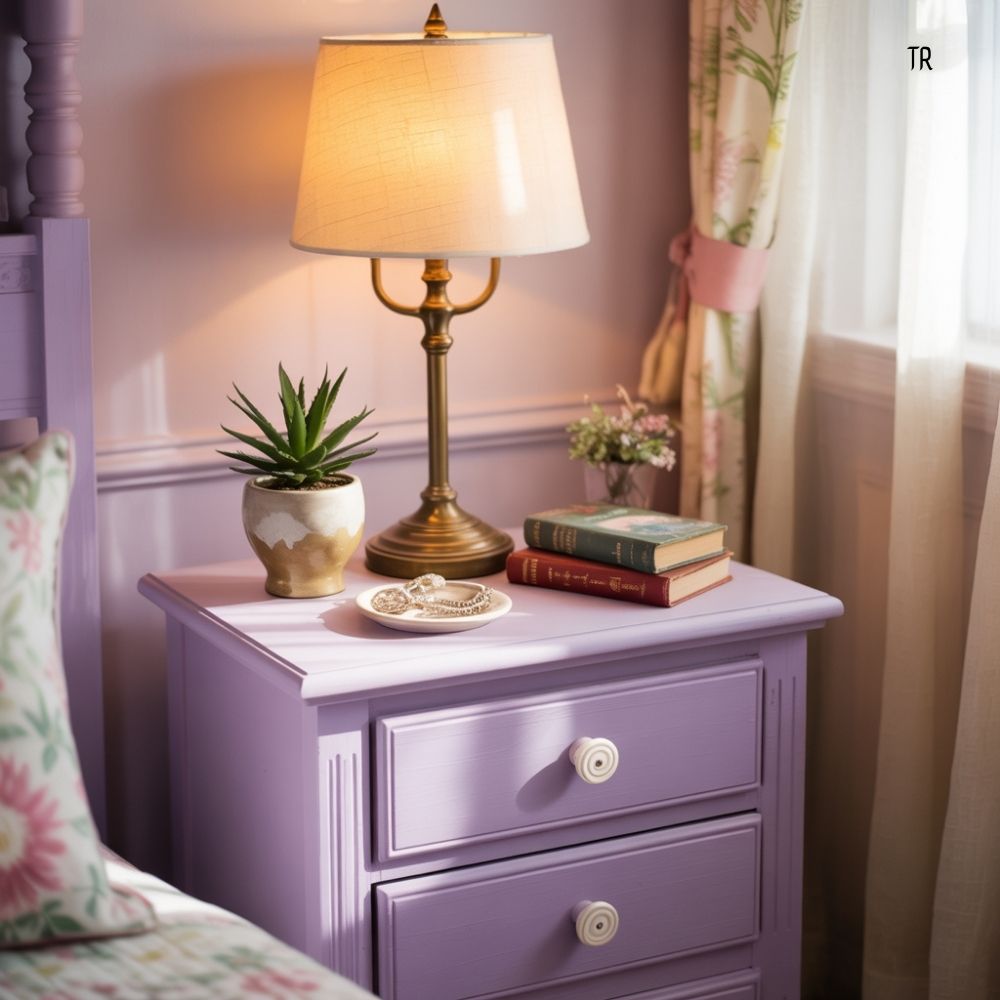
The nightstand matters because it is the last thing I see before sleeping and the first thing I reach for when I wake up. It exists in that in between space where vulnerability lives, which makes it more emotionally charged than most surfaces in my apartment.
When my nightstand feels cluttered or misaligned, it mirrors how I feel internally. Too many objects competing for attention. Nothing clearly prioritized. Rearranging it becomes a way of externalizing that feeling and then resolving it physically, which my nervous system understands more easily than abstract reassurance.
It is close enough to my body that the act feels intimate rather than managerial. I am not cleaning my whole space. I am tending to the area that holds me when everything else goes quiet.
The Act of Clearing Without Decluttering
I do not declutter my nightstand when I do this. That distinction matters to me. Decluttering implies decision making, judgment, permanence. Rearranging is gentler. Temporary. Reversible.
I remove everything from the surface and place it on the bed for a moment. Seeing the items together instead of stacked helps me understand what I have been asking myself to hold at once.
A book I am halfway through. Lip balm I keep forgetting to use. A glass that should have been taken to the kitchen hours ago. None of it is wrong. It is just waiting.
This step alone already brings a small sense of relief, because it turns an invisible feeling into something visible and manageable.

Choosing What Comes Back
As I place things back onto the nightstand, I do it slowly, without rushing to make it look good. I ask one simple question for each item, not whether it is useful or pretty, but whether it belongs in the version of the night I am about to have.
If I am overwhelmed, I keep fewer things. A lamp. A book or notebook. One object that feels grounding, often something textured like stone or wood. If I feel emotionally raw, I might keep a glass of water within reach, or lip balm, something that signals care without effort.
The process is intuitive rather than logical, and that is why it works. I am not organizing. I am responding.
The Comfort of Repetition and Placement
There is something deeply regulating about placing objects deliberately. Aligning a book parallel to the edge. Centering a lamp. Creating a small sense of symmetry where there was none before.
These movements are slow and precise, which pulls me out of my head and into my hands. My breathing naturally slows. My shoulders drop without me instructing them to. The world feels slightly more contained.
It is not the result that calms me. It is the act of choosing where things go and watching order return, even in this one small place.
How It Affects My Sleep
I sleep differently after doing this. Not because the nightstand is perfect, but because I feel more settled entering the night. There is less visual distraction, less reaching, less mental scanning.
When I turn off the light, I know exactly what is within reach and what is not. That predictability feels safe, especially on nights when my thoughts want to wander.
Even if sleep takes time, rest feels more accessible.
Over time, I realized that rearranging my nightstand is a way of reminding myself that I still have agency, even when I cannot control outcomes, other people, or my own emotions completely.
It is a physical affirmation that I can shape my environment to support me instead of letting it reflect my chaos back at me. That message lands more deeply than any internal pep talk ever could.
This habit does not eliminate uncertainty. It gives me a place to stand inside it.
How This Habit Changed How I Handle Control Elsewhere
Rearranging my nightstand taught me that control does not need to be dramatic or absolute to be effective. Small, contained actions can restore equilibrium more reliably than grand gestures.
I stopped forcing myself to fix everything at once. I started asking where I could apply gentle order instead. That shift changed how I approach difficult nights, emotional overload, and even conflict.
Sometimes the most respectful thing you can do for yourself is to tend to what is closest.
Outro
I rearrange my nightstand when I feel out of control because it gives my body something it understands immediately, which is choice, order, and care without expectation. It turns an abstract feeling into a physical action and then resolves it gently.
This habit does not fix my life. It does not make everything okay. What it does is remind me that I can still create a sense of steadiness in the places that matter most, especially when the rest feels uncertain.
On those nights, that small sense of control is enough to carry me into sleep, and sometimes, that is all I need.
Leave a Reply