
There’s a particular way skin reacts when it’s had too much, not just from products, but from life itself. It isn’t dramatic enough to set off alarms. No rash. No breakout. Just a quieter signal that’s easy to miss if you’re not paying attention.
The feeling shows up as tightness and shine at the same time, a kind of reactivity where everything feels amplified. Even water can feel like too much. That’s how I know my skin isn’t damaged or broken, just overstimulated.
On days like that, more steps aren’t helpful. Actives feel aggressive. Exfoliation sounds exhausting. Anything designed to “fix” something feels like pressure my skin doesn’t need. What actually helps is quiet. Balance. Support without expectation.
That’s when I mix my own face oil. Not because DIY is better, but because making it myself gives full control over texture, weight, and sensation. This oil isn’t meant to correct my skin. It’s a response to how it feels in that moment, and that’s exactly why it works.
How I Learned to Recognize Overstimulated Skin
For a long time, I confused overstimulation with dryness or sensitivity and tried to treat it aggressively. I layered hydrating products, added soothing serums, and reached for masks that promised instant relief.
Most of the time, it only made things worse. My skin did not need more attention. It needed less. Overstimulated skin, for me, feels like it is constantly reacting instead of resting.
Products that normally feel fine start tingling. My face looks slightly flushed without reason. There is a feeling of restlessness in the skin itself, like it cannot settle. Once I understood that, I stopped trying to fix the sensation and started trying to calm it.
Why I Turned to Mixing My Own Face Oil
Store bought face oils can be beautiful, but even the best ones often feel too complex when my skin is overstimulated. Too many ingredients. Too many essential oils. Too much intention packed into one bottle.
Mixing my own oil gave me control and simplicity. I could strip everything back to what my skin actually responds to instead of what sounds good on a label. More importantly, the act of mixing became part of the care itself. Slow, deliberate, quiet.
This is not about saving money or rejecting products. It is about choosing fewer inputs when my skin needs rest, not stimulation.
The Principles I Follow When Mixing This Oil
I keep three rules, and I never break them.
- First, fewer ingredients always win. When my skin feels overstimulated, complexity feels like noise.
- Second, texture matters more than claims. The oil has to feel comforting immediately, not promising over time.
- Third, nothing in this blend should tingle, warm, or activate. If an ingredient is known for “doing something,” it does not belong here.
This oil exists to support, not improve.
The Base Oils I Always Reach For
I start with one or two base oils that my skin already trusts. These are oils I have used on their own before and know will not surprise me.
Jojoba oil is my anchor. It feels closest to my skin’s natural balance and absorbs without leaving a heavy film. When my skin feels confused, jojoba feels familiar.
I often add a small amount of squalane for slip and softness. It gives the blend a lighter feel and helps the oil spread easily without friction, which matters when my skin feels tender.
Sometimes, if my skin feels especially dry or fragile, I add a touch of rosehip oil, but very sparingly. It brings nourishment without heaviness when used in small amounts.
What I Never Add When My Skin Feels Overstimulated
There are entire categories of ingredients I avoid completely in this oil.
- I do not use essential oils, no matter how soothing they claim to be. Even lavender feels like too much on these days.
- I avoid vitamin rich oils that feel active, even if I love them normally. No sea buckthorn, no strong botanical extracts.
- I skip anything scented, infused, or designed to target a concern. This oil is not here to target. It is here to settle.
How I Actually Use the Oil
I mix this oil fresh every time. I do not store it long term because my skin’s needs change, and I want the blend to respond to that.
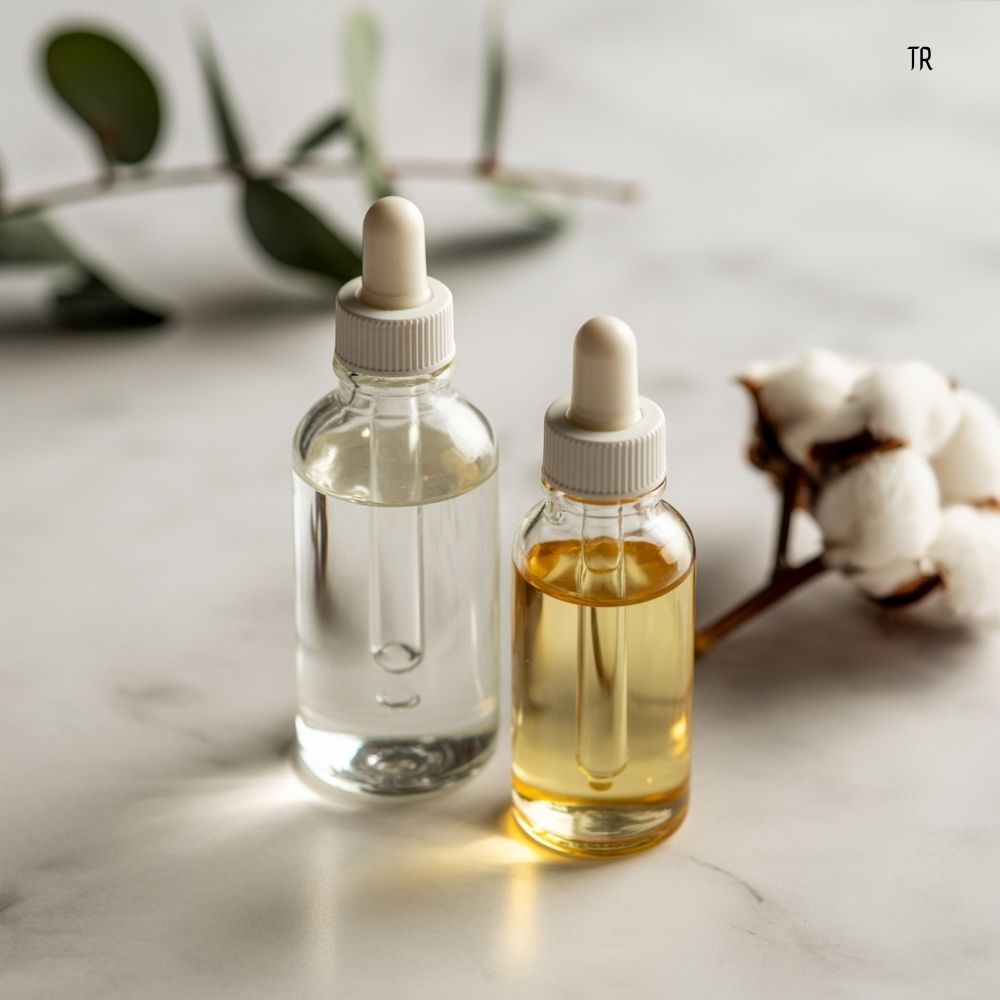
I use a clean glass dropper bottle or a small ceramic dish. I add about two parts jojoba oil to one part squalane. If needed, I add just a few drops of rosehip oil, never more than that.
I swirl the container gently instead of shaking it. Even that feels intentional, like I am trying not to disturb something that needs calm.
I only apply this oil at night, when my skin is clean and slightly damp. Damp skin matters. It helps the oil spread without pressure and prevents me from overusing it.
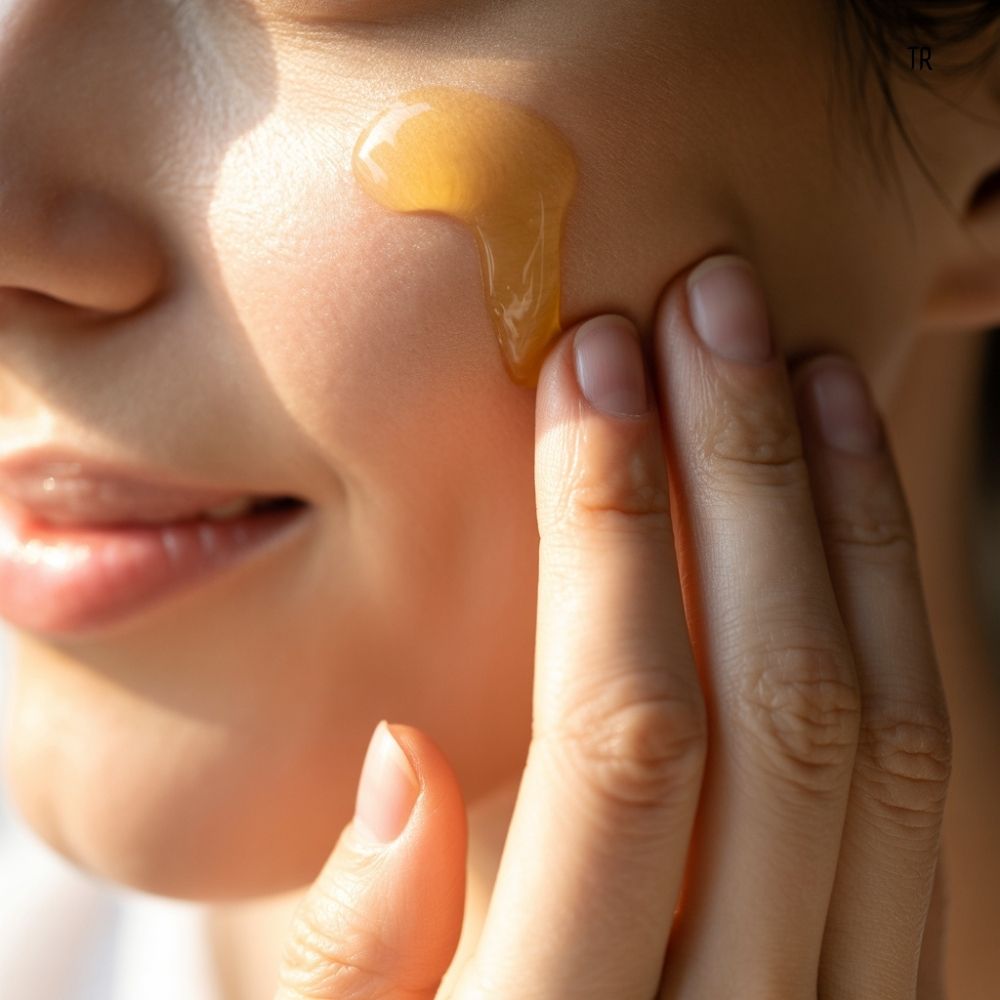
I warm a few drops between my palms and press it into my skin slowly. I do not massage. I do not stimulate. I press and hold, moving only when the oil has settled.
If my skin feels especially reactive, I stop after oil. No cream on top. No sealing layer. I let my skin breathe. On better nights, I might layer a simple moisturizer over it, but only if it feels necessary.
The Sensation I Look For
When this oil is right, my skin feels quieter almost immediately. The tightness eases. The urge to touch my face disappears. My skin stops asking for attention.
That is how I know it is working. Not by glow, not by results, but by absence of discomfort.
If I feel anything else, heaviness, warmth, tingling, I wash it off and start again another night.
What Changed After I Started Doing This
Since I started mixing my own face oil for overstimulated skin, I panic less when my skin feels off. I no longer reach for fixes. I reach for calm.
My skin has become more resilient, not because I push it, but because I let it rest. I also trust myself more. I stopped outsourcing care to promises and started listening instead.
I do not use this oil when my skin feels strong and balanced. On those days, I enjoy products that do more, that feel active, that support glow and clarity.
This oil is situational. It is not a daily staple. It is a response to overstimulation, not a routine. Respecting that boundary keeps it effective.
Outro
Mixing my own face oil when my skin feels overstimulated taught me that care does not always mean adding something new. Sometimes it means removing noise until what remains feels safe.
This oil is simple, quiet, and deeply personal. It does not perform. It does not promise. It just supports my skin when it needs rest instead of instruction.
I trust it because I made it in response to how I feel, not how I want to look. And on nights when my skin feels overwhelmed by the world, that kind of care is exactly enough.
Leave a Reply