
There’s a version of night routines that lives online that feels completely unfamiliar. They’re soft and glowing and carefully arranged, full of candles that never drip and products applied with calm, intentional grace.
Those routines seem to belong to Sundays, or at least to nights when nothing has gone wrong. But those aren’t the nights that need the most care. The nights that linger are the ones that come after crying, after holding everything together for too long, after one small thing finally tips the balance.
Those evenings aren’t aesthetic. They’re heavy, raw, and a little disorienting, like the body is still catching up to what the heart just released. What helps in those moments has nothing to do with optimization or self-improvement.
This routine is built for recovery, not glow. It’s what I do after crying, when the goal isn’t to feel better right away, but to come back into myself quietly, without pretending everything is fine yet.
Crying Changes What My Body Needs
After I cry, my body feels different in a way I did not understand for a long time. My face feels swollen and sensitive, my chest feels hollow and tight at the same time, and my thoughts move more slowly, as if they are tired too.
Trying to jump straight into a polished routine on nights like that only makes me feel more disconnected. I learned the hard way that after crying, my nervous system does not want stimulation or indulgence.
It wants simplicity, warmth, and familiarity. Anything too performative feels wrong. Anything too indulgent feels overwhelming. The goal is not to fix how I feel, but to make enough space for the feeling to settle without spilling everywhere.
I Change the Lighting Before I Do Anything Else
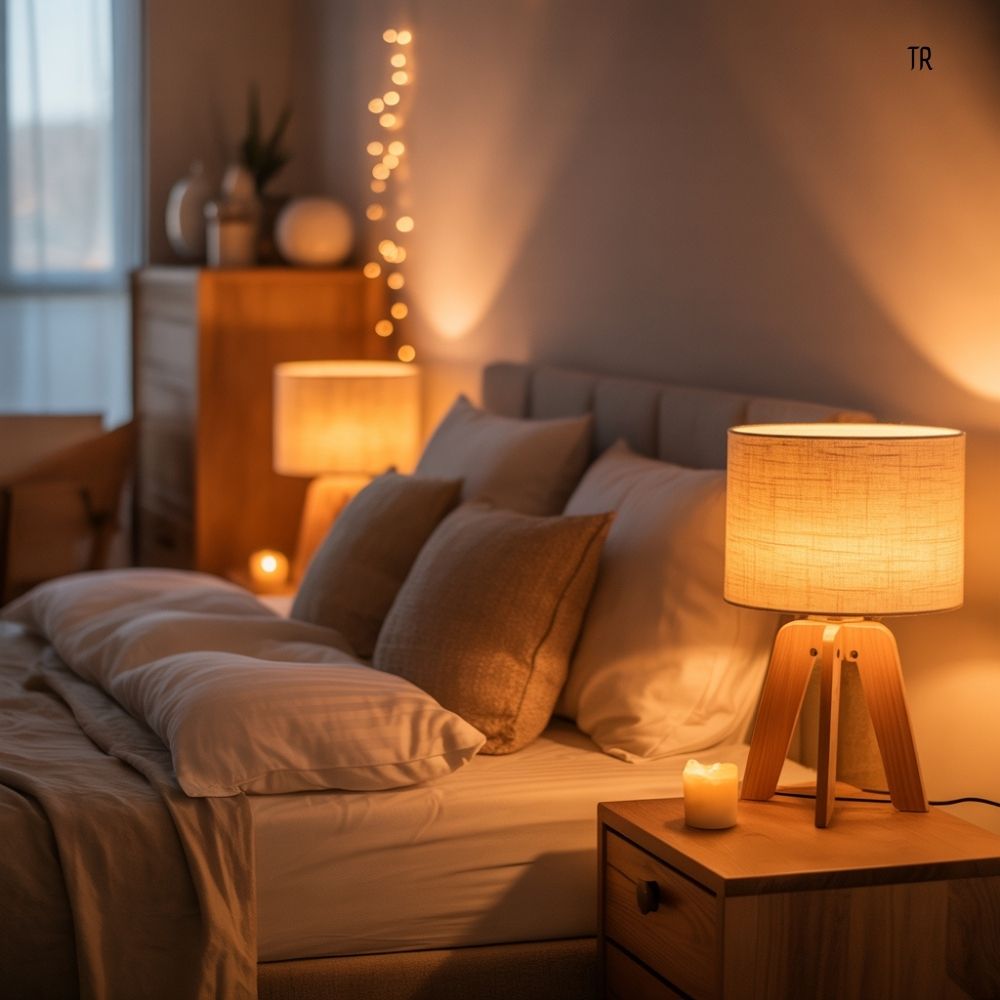
The first thing I always do is change the light. This matters more than any product I use later. Overhead lights feel aggressive after crying, like they are asking too many questions. I turn them off and rely on one small lamp or the stove light if I am in the kitchen.
Lower light immediately tells my body that it can slow down. It creates a sense of containment, like the night has edges again. I do this before I wash my face or change clothes or even take off my shoes, because it signals that I am no longer required to perform.
Washing My Face Without Trying to Reset Everything
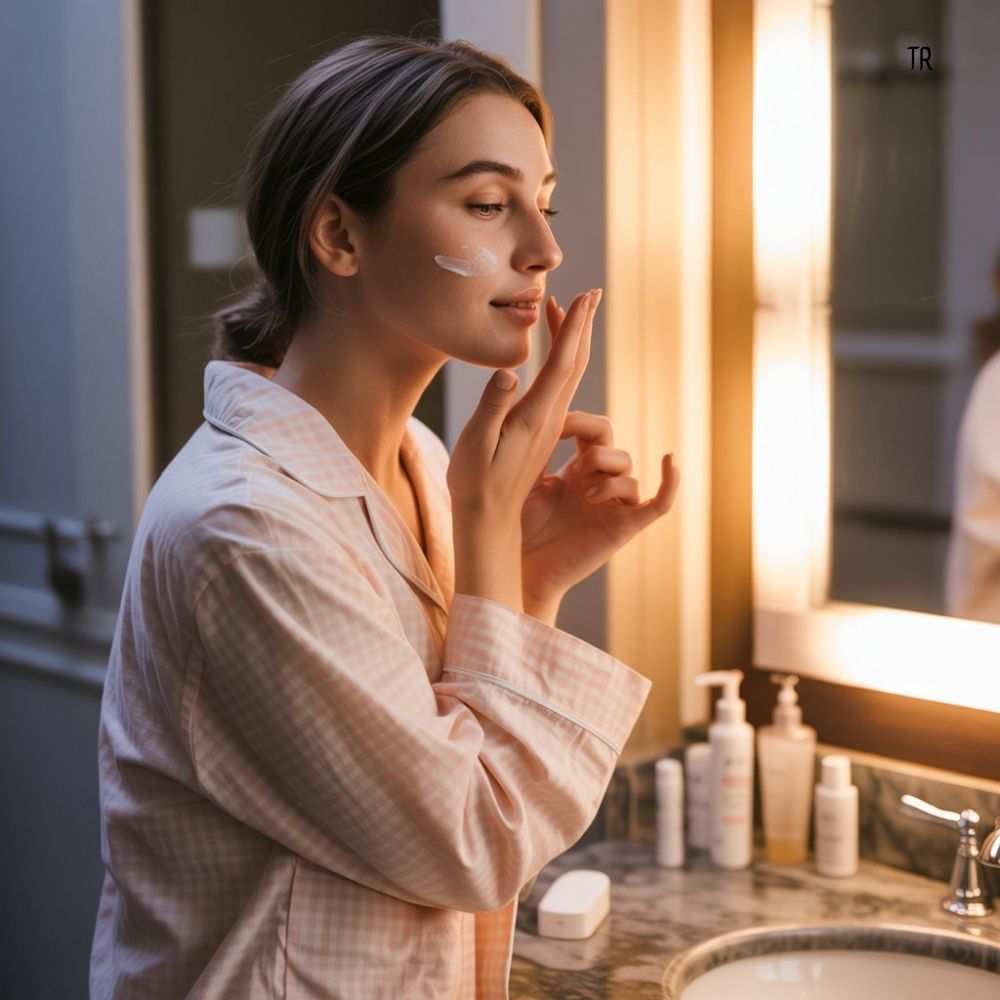
I wash my face after crying, but not in the way I do on calm nights. There is no double cleanse, no massaging for benefits, no cold tools meant to depuff me into looking fine. I use lukewarm water and a gentle cleanser, and I keep my movements slow and minimal.
I am not trying to erase evidence of crying. I am just cleaning my skin and touching my face kindly. I avoid mirrors during this step if I can, because I do not need to analyze myself. This is about sensation, not appearance.
When my skin feels clean, I press a towel lightly against my face instead of rubbing. Even that small gentleness makes a difference on nights when everything feels tender.
The Skincare I Use When My Skin Feels Emotional Too
After crying, my skin feels reactive and fragile, so I simplify everything. I skip actives completely and reach for products that feel comforting rather than corrective. A hydrating toner pressed in with my hands. A basic moisturizer that absorbs without tingling. Sometimes a thin layer of balm around my eyes because they feel tight and sore.
This is not about repairing my skin barrier or achieving results. It is about avoiding irritation and giving my face a neutral, calm baseline to rest in. My skin does not need to be taught a lesson on these nights. It needs to be left alone.
Changing Clothes Into Something That Does Not Ask Anything From Me
I change clothes as soon as my face routine is done. What I put on matters more than people realize. Tight waistbands or structured pieces feel unbearable after crying, like my body is being asked to hold itself together when it has already done too much.
I choose oversized, soft clothing, usually something worn enough that it does not cling or restrict. A sweatshirt that has lost its shape. Loose pants with a forgiving waistband. Nothing new. Nothing crisp. The goal is to disappear slightly into fabric that feels familiar.
This is not about looking cozy. It is about letting my body soften without resistance.
Warmth as a Form of Regulation
I almost always add warmth next. Sometimes it is a hot shower, not long or luxurious, just warm enough to feel steady. Other times it is a heating pad across my stomach or lower back. If I am cold emotionally, my body feels cold too, even if the room is warm.
Heat anchors me back into physical sensation. It reminds me that I am here, in a body, not just a swirl of thoughts. I stay with the warmth long enough for my breathing to deepen naturally, without forcing it.
The Food I Eat When I Need Comfort, Not Balance
After crying, I get hungry in a very specific way. Not for a full meal, but for something warm and grounding that does not require effort. This is when I make a simple bowl of noodles or toast with something salty on top. Sometimes it is leftover rice with a fried egg. Sometimes it is just broth in a mug.
I do not think about nutrition on these nights. I think about temperature and ease. Eating something warm tells my body that the moment of distress has passed, even if the emotion has not fully resolved yet. I eat slowly, often standing in the kitchen with the lights low, letting myself be quiet.
I Do Not Distract Myself Immediately
This part took practice. My instinct after crying used to be distraction, scrolling, noise, anything to avoid sitting with the aftermath. I learned that this only stretched the discomfort out longer.
Now I give myself a short window of silence before introducing any kind of media. I might sit on the edge of the bed or the couch and do nothing for a few minutes. I let my thoughts move at their own pace without interrogating them.
This is not meditation. It is just presence without pressure.
Choosing What to Watch Carefully
When I do turn something on, I am intentional about it. I avoid anything intense, emotional, or visually loud. I choose shows I have already seen, something familiar enough that I do not have to follow closely. The sound becomes background rather than focus.
This is not entertainment. It is companionship. A way to keep myself from feeling alone without asking my brain to process new information.
How I Prepare My Space for Sleep
Before getting into bed, I do a small reset that has nothing to do with cleanliness and everything to do with safety. I clear the bed of anything sharp or cluttered. I smooth the sheets lightly. I adjust pillows so they feel supportive rather than decorative.
I keep my phone face down and within reach but not in my hand. I want the option of connection without the demand of it.
Letting Sleep Come Without Forcing It
Sleep after crying does not always come easily. I stopped treating that like a failure. I let myself rest without sleeping if that is what happens. I lie down and focus on physical comfort rather than mental quiet.
Some nights I fall asleep quickly. Other nights I hover in that half awake state, listening to familiar sounds and breathing slowly. Either way, I let the night be what it is.
What This Routine Taught Me About Care
This night routine taught me that care does not always look soft or beautiful. Sometimes it looks plain and repetitive and almost boring. But boring can be stabilizing. Boring can be exactly what you need when your emotions have already done enough.
I stopped trying to turn hard nights into healing moments. I stopped asking them to teach me something. I let them pass instead.
Outro
The night routine I do after crying is not something I would ever call inspiring. It is quiet and practical and deeply personal. It exists to hold me together long enough for the night to end.
I still love calm evenings and gentle rituals when life feels stable, but I no longer confuse those with real care. Real care shows up when I am messy and tired and not ready to be okay yet.
On those nights, this routine meets me where I am, without judgment or performance, and that is enough.
Leave a Reply