
The recipe that feels most like me isn’t cozy or nostalgic, and it doesn’t gently forgive mistakes. It asks for attention. It demands timing, restraint, and presence, and the moment focus slips, it responds immediately. That honesty is part of the appeal.
This dish is one I return to not because it looks impressive on the plate, but because the process mirrors how I move through the world on my best days. Calm but alert. Controlled but responsive. Fully engaged in what’s happening right in front of me.
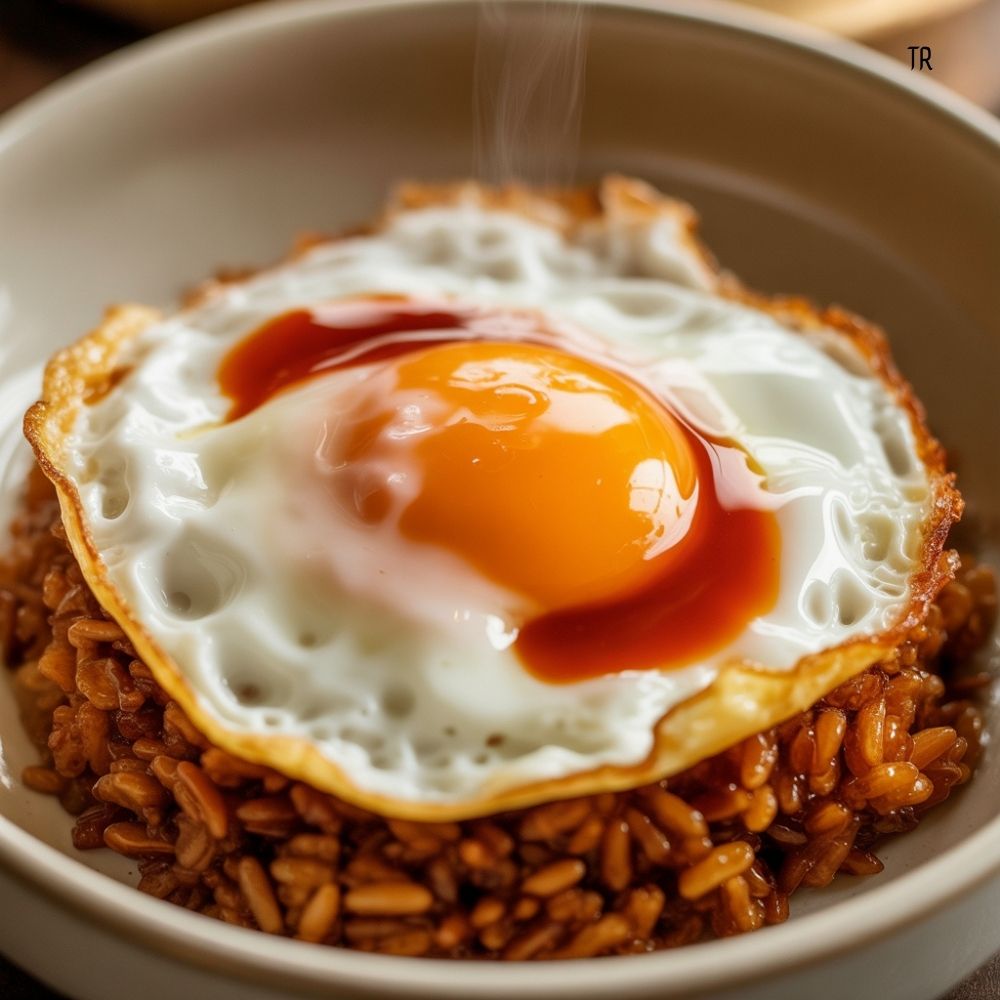
At its core, it’s pan-seared chili oil egg over crispy rice with a dark soy glaze, a simple structure built on contrast. Soft against crisp. Heat against richness. Precision against release.
The finished plate looks uncomplicated, almost understated, but nothing about making it is passive. Every step carries weight, and every choice matters. That’s exactly why it feels like mine.
Why This Dish Became Mine
I did not grow up eating anything like this. There is no memory attached to it, no story that explains why it should matter. It became important because it demanded skill without turning into spectacle. It is the kind of food you make alone, standing at the stove, listening closely.
I started making versions of it during a period when I needed something to focus on that was not emotional processing. The dish gave me a structure to work within, a series of small decisions that required presence without self analysis.
Over time, I stopped changing it dramatically. I refined it instead. That refinement is what made it feel personal.
The Core of the Dish
At its center, this dish is built on three technical elements that all need to land correctly.
First, rice that is intentionally crisped, not fried, not browned accidentally, but pressed and toasted until it develops a firm, golden crust while staying tender underneath.
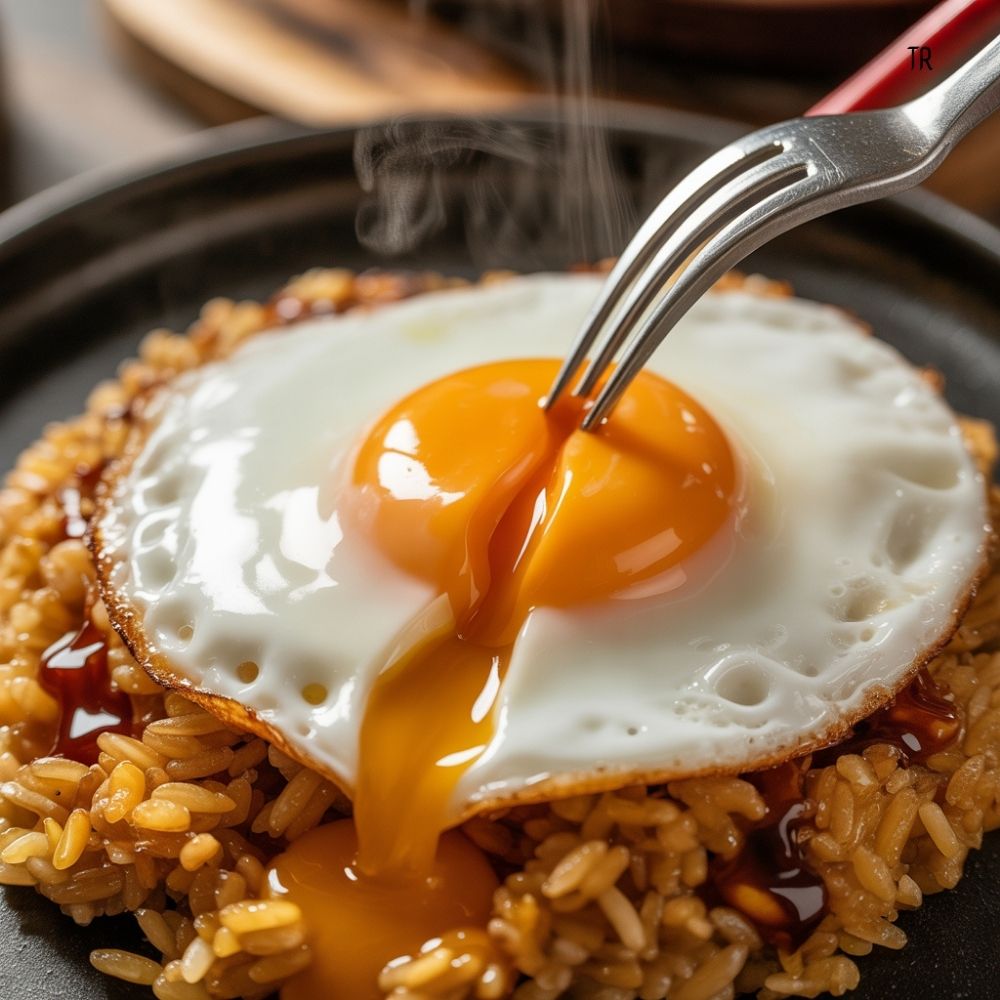
Second, an egg cooked in chili oil until the edges lace and crisp, while the yolk stays fluid but controlled, not loose.
Third, a soy based glaze that is reduced just enough to coat without sweetness, sharp enough to cut through fat without overwhelming it.
None of these elements are difficult on their own. What matters is how they interact.
The Technique That Changes Everything: Pressed Rice
This is where the dish earns its identity. I use leftover rice, always. Fresh rice holds too much moisture and never crisps properly. I heat a heavy pan and add oil, then press the rice firmly into the surface, flattening it into a single layer. Not stirring. Not tossing. Pressing.
The rice needs time. I let it sit untouched until it develops resistance, until the bottom forms a crust strong enough to lift in one piece. This requires patience and restraint. If I move it too soon, it tears. If I wait too long, it burns.
This step sets the tone. The dish does not tolerate hovering or impatience.
Cooking the Egg With Intention
The egg is cooked separately, and this matters. I heat chili oil until it is hot enough to shimmer but not smoke, then crack the egg in confidently. The oil immediately crisps the edges, creating that lacy texture that feels aggressive and delicate at the same time.
I spoon hot oil over the whites to set them quickly without flipping the egg. The yolk stays intact, contained, exactly where I want it.
This is not a soft egg meant to comfort. It is an egg meant to assert itself.
The Dark Soy Glaze
The glaze is simple but unforgiving. I reduce dark soy sauce with a small amount of water and a touch of sugar, not to sweeten it, but to round the bitterness. The glaze should be glossy, almost lacquered, but still fluid.
If it reduces too far, it becomes heavy. If it is too thin, it disappears. I stop it just before it feels finished. Residual heat does the rest.
Assembly Is Where Personality Shows
I plate the rice first, crust side up. This matters. The texture should meet you immediately.
The egg goes on top, slightly off center. I spoon the glaze around, not over everything, letting it pool in places rather than coat uniformly.
Sometimes I finish with scallions. Sometimes I don’t. If I add acid, it is minimal, a few drops of black vinegar or lemon, never enough to brighten the dish fully.
The food should feel resolved, not cheerful.
Why This Recipe Reflects Me
This dish rewards restraint. It punishes rushing. It asks for confidence without aggression.
I like food that does not perform happiness or comfort automatically. I like food that holds tension and balance at the same time. This dish does that. It is controlled, but not rigid. Rich, but not indulgent. Simple, but not careless.
It mirrors how I approach my own life now, fewer elements, more intention, less explanation.
What I Never Change
I never soften the heat too much. I never turn this into a bowl of toppings. I never rush the rice.
Those boundaries matter. They are what keep the dish from becoming generic.
I come back to this recipe because it makes me present. My hands are busy. My senses are engaged. There is no room for distraction.
By the time I sit down to eat, my nervous system has already settled. The grounding happens before the first bite. That is the point.
Outro
The one recipe that feels most like me is not sentimental or impressive. It is deliberate, slightly sharp, and quietly demanding. It asks me to show up fully, to respect timing, and to trust restraint.
I do not make it to be fed. I make it to feel aligned.
And when it comes together, crisp rice cracking under a soft yolk, heat balanced by depth, I recognize myself in it. Not softened. Not elevated. Just held together, exactly enough.
Leave a Reply